

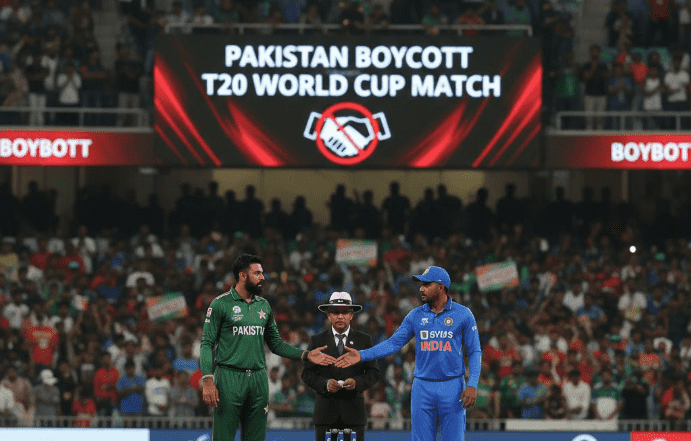
When it comes to the India vs Pakistan rivalry, cricket is much more than just a sport. Every time these two nations face each other in a cricket match, they carry history, raw emotion, and politics, and invite absolutely unprecedented global attention. And now, ahead of the forthcoming ICC Men’s T20 World Cup, the rivalry has touched the theatrics off the field. The Pakistan Cricket Board (PCB) has been issuing an ultimatum concerning its T20 World Cup match against India, a move that has ruffled a few feathers in the cricket world.
The surprise busybody has not only shaken the nerves of fans; in fact, the International Cricket Council (ICC) has also come up with an equally strong response. The battle has now become the talk of the cricket town. A major upheaval took center stage, emerging as one of the biggest controversies of the recent cricket-crazed era, involving contracts, broadcast rights, and tournament integrity.
The India vs Pakistan Rivalry: Bigger Than Cricket
Before going into the dispute, you must realize why a T20 World Cup game between India and Pakistan carries so heavy a load. These fixtures rank among the world’s most-watched cricket matches and frequently outperform even World Cup finals in terms of viewership.
Broadcast companies spend millions, the stadiums sell out within minutes, and the ICC heavily relies on this fixture’s revenue for world cricket. In other words, if the India-Pakistan game doesn’t pan out financially, no ICC tournament will.
So when the news surfaced about a possible Pakistan Boycott India T20 World Cup Match, united in support of the India T20 World Cup match, one thing was certain: shockwaves could be felt.
What Triggered the Pakistan Boycott Threat To T20 World Cup?
The threats about boycotts revolve around clauses in contracts and agreements that are signed between all member boards well before the tournament began. The PCB officials have reportedly grumbled regarding the scheduling and venue concerns, as well as other wider administrative disagreements with the Board of Control for Cricket in India (BCCI).
The PCB has given distant signals of backing out of the India game, which would be an unambiguous breach of ICC articles governing participation.
This raised immediate alarms within ICC corridors, as any boycott could set a dangerous precedent for future tournaments.
ICC Warns PCB Strongly
RFIC took the warning very seriously. An official source reveals that the governing body reminded Pakistan of its contractual obligation to play the games scheduled in Dubai. Penalties for non-compliance could be:
- Enforced heavy financial penalties
- Legal proceedings on the grounds of breach of contract
- May be fined some points
- Uncalculable damage to the image of Pakistan in global cricket
The ICC stressed that any issues internal to cricket can in no way interfere with the contractual obligations, particularly in such a significant event like the World T20.
Media Giants and Legal Pressure
The broadcast comes out as one of the economic reasons contributing to the acceleration of this issue. The media firms pay large sums to broadcast Indo-Pak cricket matches, especially those in ICC tournaments.
The boycott would result in:
- Hundreds of millions in advertising loss
- Legal action from broadcasters
- Possible lawsuits against PCB
According to sources, broadcasters are ready to take any legal recourse if the match does not occur, making PCB’s position increasingly tenuous.
Fan Reactions: Social Media Checking In
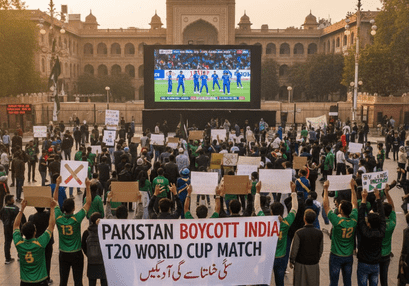
True to form, fans from all sides began taking to social media, with hashtags concerning a boycott of the Pakistan game against India in the Twenty20 World Cup gaining worldwide traction within hours.
Indian fans expressed disappointment, calling it “against the spirit of cricket,” and the views from Pakistani fans were divided — some in favor of PCB’s stance, some fearing likely international backlash.
Former players and experts joined the debate, with several voices calling for diplomacy and dialogue over confrontation.
T20 World Cup Tournament and Whether the Concept of Boycott Brought to the Limelight
The results of a boycott would be more destructive than just one match.
- Success of the Tournament
An unofficial win or walk-over, or an abandoned match would play havoc with the points table and group dynamics, affecting questions of fairness.
- Revenue Losses
The ICC and the host country would suffer a huge loss of revenue that would support financial aid for associate nations and grassroots cricket.
- Events and Possible Lack of Agreement Between ICC and Future Hosts
This issue would call for some extremely stringent guidelines. Great directions will be put into the waiver, reflecting excessive restrictions related to any such incidents taking place in future ICC tournaments.
Indian Stance: Silence and Background Work.
While this was a thought-provoking issue of decision, the BCCI chose to stay quiet and let the world body handle it. Back in history, India has allowed global bodies to mediate these issues while they prepare to win matches.
As Team India continues their preparations, they are aware that any untoward situation might steer it off course from its title aspirations.
A Rivalry Too Big to Be Abandoned
Whatever the political and administrative tensions in the backdrop, India vs Pakistan always makes sure it happens, if nothing else. This is true especially in any ICC event, because the stakes—lots of money, emotions, global status—get way too high for the games not to be played.
The boycotted matches never seem to become a reality; that is to say, the planned boycott remains just talk. Owing to the ICC’s warnings or legal repercussions, it could well happen that unrest would subside no later than a couple of weeks before 26 September 2021.
What Happens Next In T20 World Cup?
It will be seen over the next few days what is to come. Probable outcomes might be:
- Diplomatic talks between ICC, PCB, and BCCI
- Written assurance with respect to participation thereafter
- Revised scheduling/venue clarifications
Therefore, the ICC, with its firm foot down, will not let this tournament go down without a match of monumental clashes.
Why Does This Controversy Matter to Global Cricket?
This is the growing chasm in international cricket: politics vs governance vs commercial interests. The issue of Pakistan’s boycott of India, as well as the T20 World Cup hostility, pertains to the sustainability and stability of global-level tournaments.
The manner in which this contentious issue is resolved will indeed create policy for the ICC for years to come.
Final Thoughts On T20 World Cup
Cricketing rivalries, a source of prosperity for the sport, prosper at the expense of the world’s soul: India vs Pakistan. While squabbles are part of any sporting contest, boycotts do threaten the very fabric of the sport. All who love the game in any corner of the earth expect some meaningful outcome of this to ensure the game flourishes for eternity.
With the onset of the T20 World Cup, the focus remains on the ICC and also on the PCB. Certainly, this debate has already secured its place amongst the most dramatic off-field moments in the contemporary history of cricket.