

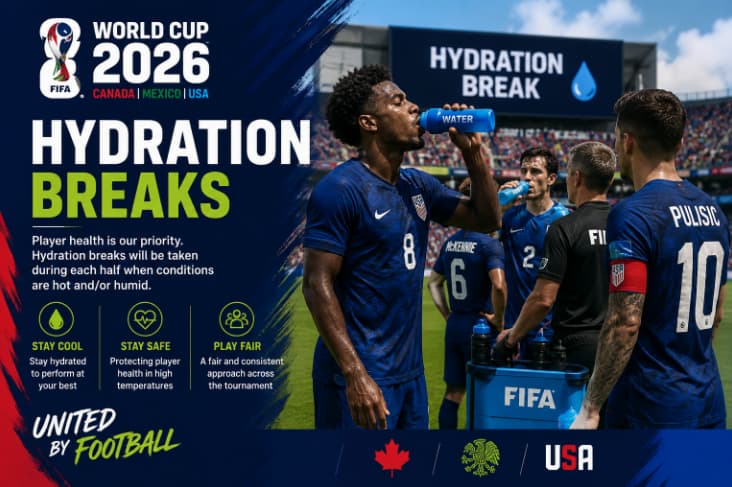
The FIFA World Cup 2026 Hydration Breaks topic has become kinda more important lately as fans and experts gear up for what is described as the biggest tournament in football history. Since the expanded competition will be staged across the United States, Canada ,and Mexico, there are real worries about high temperatures, plus general player safety, and that has turned into ongoing talk about added cooling measures.
As excitement for the FIFA World Cup 2026 keeps building, hydration breaks are expected to play a noticeable role in helping protect players during extreme weather. These brief pauses might not only help footballers stay sharp in the moment, but also help supporters get matches that feel more intense, competitive, and high-grade all the way through the tournament.
Why FIFA World Cup 2026 Hydration Breaks Are Necessary
Modern football requires tremendous physical stamina. Athletes often cover well over 10 kilometers across a match, and when the temperatures climb above safer thresholds, dehydration can start to undermine performance very fast.
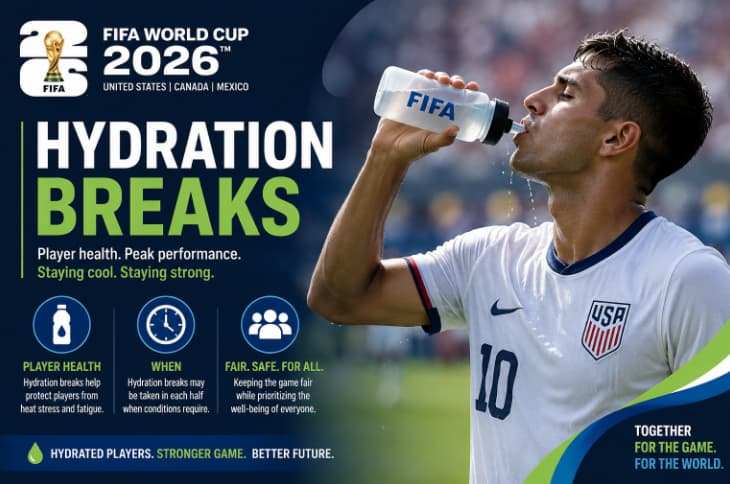
The FIFA World Cup 2026 Hydration Breaks are meant to give players brief chances, to drink water, and also electrolyte mixes, keep their body temperatures down a notch, limit the danger of heat exhaustion, and still get quick tactical clarifications from the coaching team. This setup helps the athletes stay focused and maintain high intensity right up to the end of the match.
Since the games are scheduled across different regions of North America, and the weather can swing a lot, FIFA is expected to put player welfare first, more than ever.
Heat Conditions Could Impact FIFA World Cup 2026
The FIFA World Cup 2026 will happen in 16 cities across three countries. A number of venues, especially in Mexico and parts of the United States, might see very high summer temperatures.
The cities most likely to face hotter conditions include
- Dallas
- Houston
- Miami
- Monterrey
- Guadalajara
- Mexico City
When temperatures rise above 30°C, it can affect performance quite a bit and also add to fatigue. That is why the FIFA World Cup 2026 Hydration Breaks matter so much, and they cannot be treated like a small detail.
How Hydration Breaks Work in Football
Hydration breaks in football… they are not really a new thing, i mean not for international play. FIFA rolled out hydration pauses in earlier tournaments too, especially when the weather was extreme, and games had to be handled carefully.
In most matches, it tends to look like this
- One pause comes around the 30th minute,
- a second one happens near the 75th minute,
- each break lasts about 90 seconds or close to it.
While the match is paused, players usually head toward the touchline and handle a few essentials. That includes drinking fluids, plus cooling down using towels, or ice packs, they even sometimes wipe sweat off in a very methodical way.
Who decides if hydration breaks are needed? the referee does, based on weather details and the official heat assessments. If the conditions change, then the plan can change too.
Lessons learned from earlier FIFA World Cups
FIFA has already used cooling breaks in tournaments that happen in hot regions. The 2014 FIFA World Cup in Brazil had multiple hydration pauses, because temperatures were intense and consistent.
Then in the 2022 FIFA World Cup in Qatar, the stadium setups included more advanced cooling technologies, inside the venues. Even with that, hydration still stayed a major part of how players prepared and managed their energy during play.
These experiences give good lessons for the FIFA World Cup 2026, where very different weather patterns might show up and bring fresh, not so simple obstacles.
FIFA World Cup 2026 Will Be the Biggest Ever
The FIFA World Cup 2026 is expected to turn into the biggest version ever recorded in football history.
There are major changes, for example
- 48 national teams
- 104 total matches
- Three host countries
- More stadiums and longer trips
- A month long festival of football
With more games than ever before, player recovery will matter a lot more. So, FIFA World Cup 2026 Hydration Breaks may end up being necessary, for keeping performance levels steady across the whole tournament.
How Hydration Shapes Football Performance
Hydration is tied closely to athletic output. Even mild dehydration can cause
Lower stamina
Players run out sooner, and pressing effort becomes harder to sustain
Reduced focus
The mind gets less sharp, so more errors show up and defensive mistakes become more likely
Greater injury risk
Muscle cramps and fatigue can lead to muscle strains and other injuries, sometimes fast and a bit unexpectedly.
Slower recovery can happen too, especially when the body is already stressed. Players who take part in multiple matches, or play back to back, need adequate hydration for proper recovery and for not just “getting through” the next run.
So, bringing in the FIFA World Cup 2026 Hydration Breaks could meaningfully improve player safety, and it may also raise match quality.
Also, fans get something from hydration breaks
Even if the cooling breaks are mainly to protect players, the stands can gain as well.
These pauses give people a moment to :
- Assess tactics.
- See instant replays.
- Take refreshments.
- Talk through key moments on social media.
- Get ready for the exciting final stages.
Because of that, the viewing experience remains engaging while player welfare stays guarded, and nobody feels left out, not really.
Which teams might gain the most?
Some squads are more used to hot climates and may adjust better during the FIFA World Cup 2026.
Teams and countries that often do well in warmer conditions include:
Brazil
Brazilian players often face tropical stadium conditions and seem to understand how to budget their energy in practical ways.
Argentina
The current world title holders include experienced players who can set the rhythm even when the environment feels hard to endure.
Mexico
If they play in their own country, it may become an advantage. Especially because they already know the altitude and the climate.
Morocco
Most African teams are accustomed to hotter weather, and that experience can make them tricky opponents.
Spain
Spain uses a ball-dominant approach which helps preserve energy during those demanding, physical matches.
Still hydration breaks matter, because they give every side a fair chance to control fatigue.
Sports Science and the FIFA World Cup 2026
Football has moved into a new era where sports science affects performance from many angles.
Elite national squads tend to depend on:
- Hydration specialists.
- Nutrition experts.
- Performance analysts.
- Recovery coaches.
- GPS tracking systems.
As a result, FIFA World Cup 2026 Hydration Breaks fit right into modern football strategies, though people often treat them like a minor detail.
Managers can use those short intervals so they can:
- Switch tactical setups around.
- Re energize the squad mentally.
- Tune the pressing intensity.
- Set up substitutions in advance.
So hydration breaks are turning into real tactical time, not just a simple water pause.
Star Players Who Will Need Proper Recovery
The FIFA World Cup 2026 should bring together many global superstars, and the workload will be heavy.
Fans are likely to watch:
- Kylian Mbappé
- Erling Haaland
- Jude Bellingham
- Vinicius Junior
- Lamine Yamal
- Pedri
- Jamal Musiala
- Florian Wirtz
These top level athletes will deal with tight calendars and serious physical pressure. Because of that, hydration management could swing outcomes during those crucial knockout encounters.
FIFA’s Growing Focus on Player Welfare
Over time, FIFA has added many measures meant to protect athletes.
This includes:
- Five substitutions.
- Concussion protocols
- Cooling breaks
- Better pitch quality
- Advanced medical support, okay.
- Better recovery facilities, as well.
The FIFA World Cup 2026 Hydration Breaks are another step toward making football safer and, also more sustainable.
Could Climate Change really nudge FIFA World Cup 2026?
Climate experts have been warning , again and again, about rising temperatures across many regions around the world.
Extreme heat events are happening more often, so sporting organizations really have to adapt, and fast.
FIFA may end up considering things like:
- Evening kickoffs, instead of the usual timing.
- Training facilities with more shade.
- Additional water stations placed around the grounds.
- Flexible scheduling, depending on forecasts.
Extended cooling breaks when it becomes necessary, during key moments.
So, in the end, climate conditions could influence the way the FIFA World Cup 2026 gets organized.
What fans might notice during matches
Football supporters going to games should expect summer style conditions.
Fans are advised to:
- Stay properly hydrated.
- Wear light clothing.
- Use sunscreen, before kickoff.
- Arrive early.
- Follow stadium safety guidelines, closely.
Meanwhile, broadcasters might use hydration breaks to drop in tactical analysis and exclusive insights, and honestly it makes the whole viewing thing feel more enjoyable for audiences worldwide.
The Future of Football and Cooling Breaks
A lot of specialists think hydration breaks will, in time become a regular element in the biggest tournaments.
With player workloads still rising, cooling pauses could turn into a lasting, steady part of elite football.
The FIFA World Cup 2026 Hydration Breaks should show how modern football tries to keep the spectacle going while also caring for athlete welfare.
Safeguarding players while still protecting the quality of the game stays FIFA’s main intention.
Final Thoughts
The conversation around FIFA World Cup 2026 Hydration Breaks shows that football keeps moving forward. With hotter climates, more matches, and physical expectations that feel unprecedented, player safety has become a real priority.
With the FIFA World Cup 2026 still looming, the countdown keeps moving and fans can expect one of the most remarkable sporting displays, ever put together. Those hydration breaks might look like brief pauses, but they could matter a lot, even for the world’s best players, so they can stay sharp and deliver their peak performances.
In the end these cooling intervals are not only about water either, they’re about protecting the energy , the thrill , and all those unforgettable beats that make the FIFA World Cup the biggest happening in global sport.